
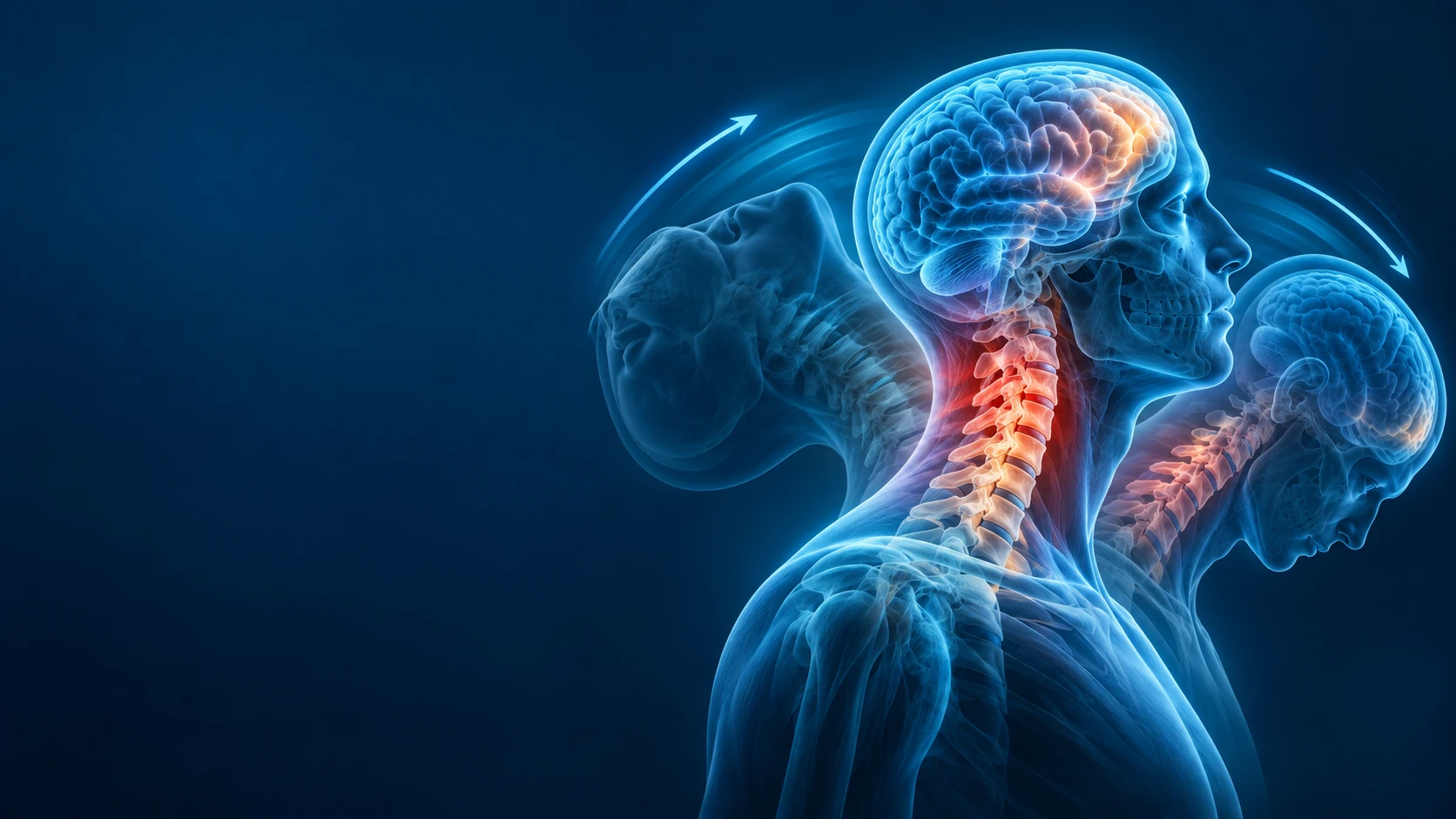
Most people think of whiplash as a stiff, sore neck that fades in a few weeks. But if you've had headaches, dizziness, brain fog, or trouble sleeping since your crash, you may be dealing with more than a neck strain.
At New Castle Personal Injury Doctor, patients across New Castle County, DE often tell us the same thing: "My neck hurts, but what worries me is that I can't think clearly." This guide explains what researchers know about how the brain may change after whiplash, which symptoms matter, and when to see a car accident doctor.
What Is Whiplash, Really?
Whiplash is an injury from a sudden acceleration–deceleration force. Your head whips forward and back, often in a rear-end collision, even at moderate speeds. It's usually described as a bone or soft-tissue injury of the neck. Many people with whiplash also report symptoms that suggest the brain is involved, such as headache, dizziness, sleep problems, trouble thinking, and visual symptoms.
That's why a proper exam at an accident and injury center in New Castle County, DE should look beyond the neck.
Can Whiplash Affect the Brain?
Your brain floats in cerebrospinal fluid inside the skull. In a crash, your head can move violently even without hitting anything. You don't need to strike the windshield or lose consciousness for the brain to be affected. Research suggests a possible link between whiplash and concussion:
- Biomechanics: A modeling study of rear-end crashes found that the head hitting the top of a head restraint in one crash produced brain strain similar to a football helmet impact associated with concussion.
- Overlapping symptoms: Clinicians note that whiplash and concussion can look alike in symptoms and mechanisms, and there's no gold-standard test for either, so a concussion can go unnoticed in someone diagnosed with whiplash.
- Imaging findings: Some researchers have used diffusion tensor imaging, a type of MRI that tracks white matter pathways. A review of this research reported that the link between whiplash and brain injury has not been clearly established, even though several studies point to possible changes.
- Still debated: Scientists continue to study how often whiplash causes measurable brain injury. Standard MRI and CT scans often look normal, which doesn't mean symptoms aren't real. Small or functional changes may not show up on routine imaging.
For a plain-language overview of concussion signs and recovery, the CDC's HEADS UP concussion resource is a helpful outside reference.
Brain and Nervous System Changes Researchers Have Explored
- Attention and concentration. In one clinical study, whiplash patients scored significantly lower than matched controls on attention and concentration tests, and some still had cognitive problems a year later.
- Blood flow and brain function. Functional imaging studies have reported changes in cerebral blood flow in some people with chronic whiplash-associated disorders. Researchers are still working out what those changes mean.
- White matter pathways. Researchers are studying whether the stretching and shearing forces in a crash can disturb the brain's communication pathways. This could help explain slowed thinking, mood changes, and fatigue in some patients.
- Pain processing. Long-lasting pain after a crash may reflect changes in how the nervous system handles pain signals, not only tissue damage in the neck. This is one reason early, active care matters.
Warning Signs: When Whiplash May Involve the Brain
See a car accident doctor near you if you notice any of these after a collision:
- Headaches that are persistent or worsening
- Dizziness, balance problems, or feeling "off"
- Brain fog, poor memory, or trouble concentrating
- Blurred vision or light sensitivity
- Ringing in the ears
- Sleep disruption or unusual fatigue
- Irritability, anxiety, or low mood
- Neck pain and stiffness, or back pain after an accident
Symptoms can be delayed by hours, days, or even weeks. Adrenaline often masks pain right after a crash, so feeling fine at the scene doesn't mean you're uninjured.
Seek emergency care immediately for loss of consciousness, repeated vomiting, seizures, confusion, worsening headache, weakness, or numbness.
Why Early Evaluation Matters
Waiting can let problems settle in. A thorough evaluation after a crash can:
- Identify neck, spine, and possible head-injury symptoms together
- Create a baseline for tracking recovery
- Guide safe, appropriate treatment
- Document your injuries clearly if you have an insurance claim
Our auto accident injury care approach starts with a detailed history and exam so nothing gets missed. If your symptoms suggest something beyond a musculoskeletal injury, we can coordinate a referral to the right specialist.
How Whiplash Symptoms Are Treated
The right plan depends on your exam findings. Common components include:
- Chiropractic care. Gentle, targeted car accident chiropractic care can help restore neck and spine motion and ease pain and headaches from joint and muscle dysfunction.
- Physical therapy. Guided rehab strengthens the deep neck muscles, improves posture and mobility, and retrains movement. Our physical therapy treatment in New Castle County is built around gradual, active recovery, which research generally favors over prolonged rest.
- Targeted whiplash care. See our page on whiplash symptoms and treatment for how we approach neck pain, stiffness, and headaches after a collision.
- Back and spine care. Whiplash rarely affects only the neck. If you're dealing with back pain after an accident, a whole-spine evaluation is important.
- Symptom-guided pacing. If concussion-like symptoms are present, activity and screen time may need to be paced carefully, with gradual return to normal routines under professional guidance.
What to Do After a Car Accident
- Get checked promptly, even if you feel okay.
- Report symptoms accurately, including headaches, fog, and dizziness, not only neck pain.
- Follow your care plan and attend follow-ups.
- Track your symptoms in a simple daily log.
- Avoid guessing about recovery. Whiplash timelines vary widely from person to person.
Not sure who to see first? Read our guide to choosing a car accident doctor near you.
Frequently Asked Questions
Can whiplash cause brain fog?
Yes, many people report trouble concentrating after whiplash. Causes can include concussion-like effects, pain, poor sleep, and stress. A proper evaluation helps sort out which are involved.
Will a normal MRI rule out a brain injury?
Not necessarily. Standard imaging often looks normal in mild injuries, and diagnosis usually relies on symptoms and clinical testing.
How long do whiplash symptoms last?
Many people improve within weeks to a few months. Others have symptoms that linger, and early care can support a better recovery.
Do I need a car accident chiropractor or a doctor?
Often both play a role. A thorough exam determines the best care plan, including whether you need a specialist referral.
Get Whiplash Care in New Castle County, DE
You don't have to wait for symptoms to get worse. If you were in a crash and have neck pain, headaches, dizziness, or foggy thinking, our team can help you understand what's going on and build a recovery plan. Schedule your evaluation at New Castle Personal Injury Doctor today — your local accident and injury center for auto accident injury care in New Castle County, DE.
This article is for general education and isn't a substitute for professional medical advice, diagnosis, or treatment. If you have severe or worsening symptoms, seek emergency care.